New Zealand Geographic
To The Rescue
(#photography)
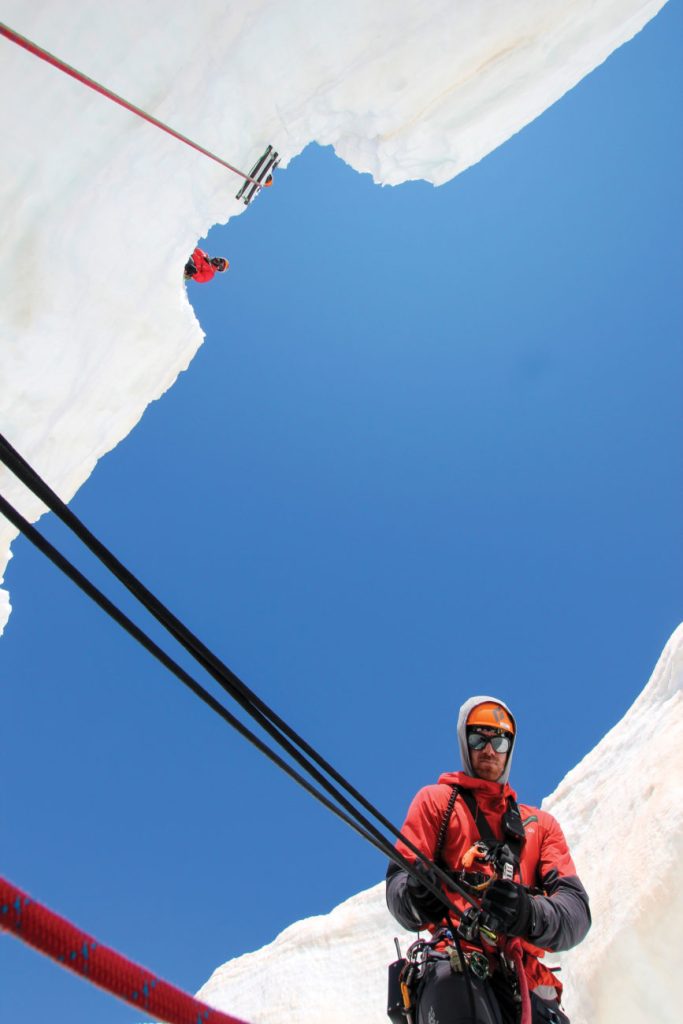
You’ve hurt yourself in the mountains, and you’ll never make it out on your own. What happens next?
First ascent: finding unclimbed walls in the Darrans
(#writing, #photography)
The Darran Mountains lie deep in the marrow of northern Fiordland—a chunky, perplexing range of diorites and sandstones, gneisses and granites. This is a land of extremes, with the country’s most remote summits, the greatest rainfall and the longest, hardest-to-climb alpine rock walls. Adventurers have been coming here since William Grave and Arthur Talbot in the late 1800s, to test themselves and forge new routes through this vertical landscape.

To Haast, The Hard Way
(#writing)
In summer, a team of climbers embarked on what would be an ambitious and gruelling attempt to traverse the Southern Alps. They began on bicycles in Christchurch and, more than a month later, finished in Haast, having walked 200 km—some on trails pioneered by Charlie Douglas more than a century ago, other times taking routes no one had attempted before.

On the Edge
(#writing)
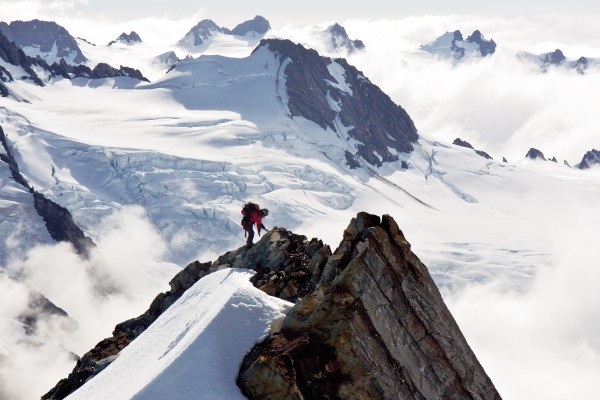
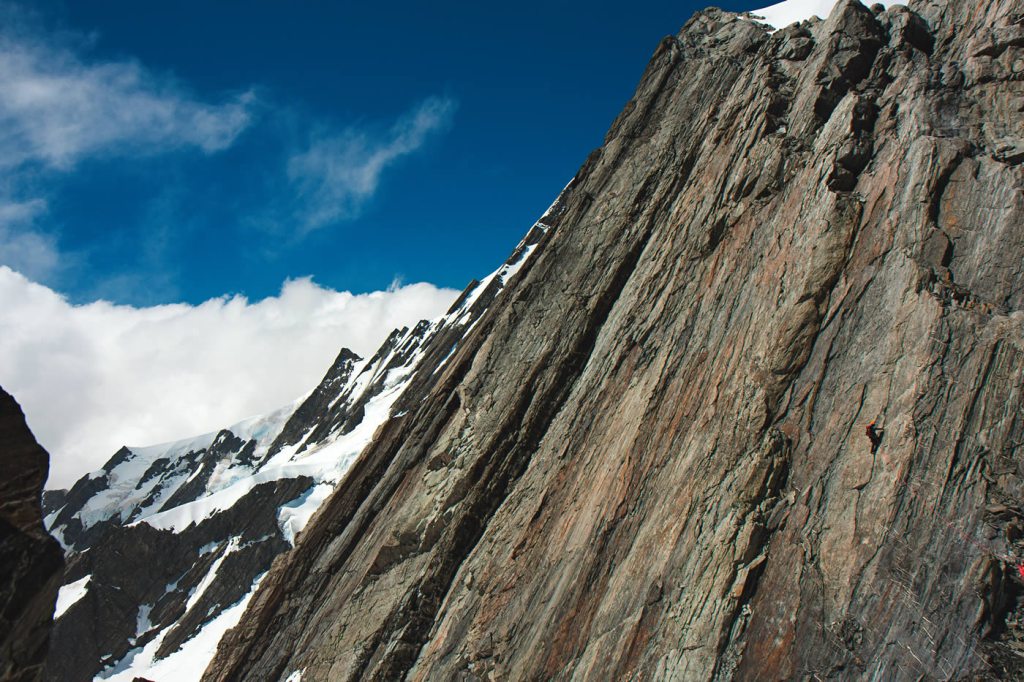
The face of mountain climbing in New Zealand is changing. As glaciers retreat, access to our high peaks becomes more difficult and, in some cases, near impossible. Climbers are pioneering entirely new routes to reach summits. This summer, a small team of climbers forged their way into the heart of the Spencer Glacier, and struck a new line up the sheer rock flank of Mt Walter—the first new route there in over 30 years.
Alpinist Magazine
Mountain Profile Essays | Jannu
In Alpinist 24, the great Russian alpinist Valery Babanov declared, “Any ascent of Jannu is a leap into the unknown, and the unpredictability of the result grows geometrically with the increasing difficulty of the line…. Any path to Jannu would require the surpassing of ourselves.” On the Nepali side of the Kangchenjunga Himal, near the border with India, this 7710-meter summit remains one of the most challenging peaks in the world.

Mountain Profile: Darran Mountains, New Zealand
(#writing)
For more than 100 years, small bands of climbers have struggled through rain-soaked forests to reach the great ice and rock lines of the Darran Mountains in New Zealand. And yet, even today, many of the vast walls remain largely unknown. Paul Hersey sifts through the rich stories of this oft-forgotten range, …

The Glaciers Are Retreating: Southern Alps, New Zealand
(#writing)
“WATCH ME,” JAMIE VINTON-BOOT calls out. He dinks at the aquamarine-hard ice with his tools. His frontpoints scratch above the obsidian depths of a sepulchral crevasse.
“All good, mate. You’re looking solid,” I shout back. The rope slivers over the narrow ramp of glacier beneath my feet. Jamie hasn’t placed an ice screw yet. If he slips now, he’ll pendulum right into the crevasse. There’s water dripping somewhere. I feel a sudden, voyeuristic urge to peer into the darkness of the deep cleft below…
 Paul Hersey Writing